Executive Summary
South Carolina’s magistrate court and circuit courts play a critical role in resolving landlord-tenant disputes efficiently and fairly. In practice, however, procedural inconsistency, judicial discretion that overrides statutory mandates, and systemic delays have eroded predictability—particularly in eviction cases.
This open letter to the South Carolina Supreme Court outlines recurring failures observed across multiple counties, including unlawful delays in issuing writs of ejectment, refusal to allow private process servers despite Rule 4 authorization, inconsistent enforcement of appeal bond requirements, and the growing misuse of “settled” case designations in contested eviction matters.
With over 20 years of experience as a property manager and now as an attorney, I have personally witnessed the deterioration of fair and equitable justice in our magistrate courts—especially since the Supreme Court sanctioned the current housing court model. This letter is not written out of frustration alone. It is written as a sincere plea to the South Carolina Supreme Court: to recognize the urgent need for reform, oversight, and accountability within our magistrate and circuit court systems. The erosion of uniformity, disregard for statutes, and tolerance of court-sanctioned delays is damaging the integrity of the judicial process and contributing to the affordable housing crisis in this state.
Why This Commentary Matters
South Carolina’s magistrate courts are often referred to as the “people’s courts”[1]—a place where citizens can seek swift, accessible justice. But for those of us who practice in them regularly, a different picture emerges: one of inconsistency, judicial overreach, and procedural dysfunction.
What was designed as a streamlined venue for minor civil matters has become, in many cases, a system where personal discretion eclipses statutory obligation, and justice is routinely delayed—particularly for landlords.
Key Issues Identified in South Carolina Magistrate Court and Circuit Courts
- Inconsistent application of South Carolina statutes and procedural rules
- Judicial refusal to permit private process servers despite Rule 4 authorization
- Unlawful delays in issuing writs of ejectment beyond statutory timelines
- Housing court practices that incentivize delay rather than resolution
- Appeals used as a strategic delay tactic without consistent bond enforcement
- Misclassification of contested eviction cases as “settled” in public court records
Each of these issues undermines procedural fairness, predictability, and public confidence in the judicial system.
Ignoring the Rules: Inconsistent Application of Law
A prime example is the outright prohibition by certain magistrates on the use of private process servers. Despite the clear authorization under Rule 4 of the South Carolina Rules of Civil Procedure, some judges require service to be completed exclusively by their constables. This not only contravenes the rule but causes unnecessary delays in time-sensitive cases such as evictions. In two counties, courts acknowledge that private service is allowed, but insist on giving their constables “the first bite at the apple.” When constables fail—which often takes two to three weeks—courts still refuse to allow private process service and instead require 20-day service by mail. This nearly always results in at least an additional month of missed rent.
Delays That Violate the Law Harm Everyone
Statutory Requirement:
South Carolina Code §27-37-40 states that a writ of ejectment must be issued within five days of a ruling in favor of the landlord.
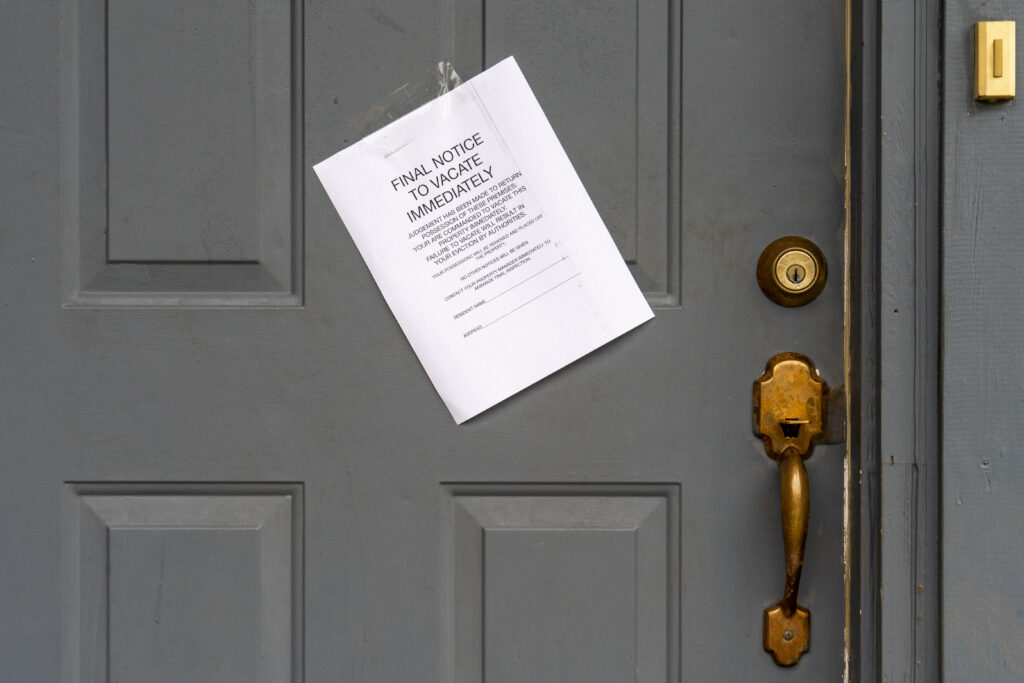
Yet, in my experience over the past two years, writs are issued within the required time frame in only about 10% of cases. The only time the rule is followed is when a tenant fails to appear for the hearing. For all other cases, magistrates routinely delay writ issuance by two to six weeks—or even longer. This is not just inefficiency – it’s a legal failure. These unlawful extensions cost landlords thousands of dollars. One county even implements a five-day “voluntary vacate” grace period before issuing a writ, without any statutory support. After the tenant is served and the 10-day period of time to request a show cause hearing has expired, the Judge in this particular county requires the Landlord to request a warrant of ejectment providing notice to the tenant they have 5 days to vacate. After the 5 days lapses the Landlord then has to go in and pay for the writ, the constable must return the writ as posted and the Landlord is then required to come back to the court to get the writ and only then can Landlord call the Sheriff’s office to schedule a put-out. The constable usually takes several days to return the paperwork, and the landlord is required to then visit the court for the third time within one eviction. When questioned, court staff respond dismissively telling Landlords and attorneys “it’s the judge’s interpretation of the law”.
These systemic violations don’t just impact large property owners—they hurt all landlords, including small-scale ones who depend on timely rent to pay their own bills. Ultimately, tenants who follow the rules end up paying higher rents as housing providers adjust for growing legal risks and income instability.
Delays and procedural inconsistencies at the magistrate court level do not just burden landlords—they erode public trust in the legal system and damage the very communities the courts are meant to serve. As the R Street Institute notes, when courts fail to act swiftly and predictably, it creates a ripple effect that hurts both parties and undermines safety, fairness, and economic stability.[2]
While many advocates push for procedural leniency in the name of fairness, the reality is that “bad actors”—whether repeat criminal offenders or chronically non-paying tenants—exploit those very delays. And as R Street emphasizes, the justice system must balance compassion with the need for timely, enforceable outcomes. That balance is missing in many magistrate courts today.
In the landlord-tenant context, drawn-out eviction processes do not help struggling tenants find long-term housing solutions. Instead, they trap landlords in cycles of loss, delay neighborhood cleanup and re-renting, and contribute to increased housing costs for future renters.
When courts fail to follow statutory timelines, they don’t promote justice—they defer it, at a steep cost to everyone involved.
Overcrowded Dockets and Favoritism
Courtroom inefficiency has become a defining feature of landlord-tenant dockets across the state. In counties without designated housing court attorneys, cases are generally called in a fair and predictable manner—typically by scheduled order and party arrival time. However, in counties with volunteer housing court attorneys, the process has evolved into something far less structured and far more inequitable.
I say this not as an outsider, but as someone who volunteered in the housing court program when it first launched. In its early days, the program was built on a foundation of responsible advocacy. We verified financial eligibility before offering representation and made good-faith efforts to contact tenants in advance of their hearing to avoid wasting the court’s time—or the landlord’s. That basic standard of integrity has eroded.
Today, intake clerks often take the tenant’s word at face value without verifying income or eligibility. There’s no cross-check with landlords, even though landlords typically conduct employment and income verification beforethe tenant ever moves in. When tenants claim at the courthouse that they can no longer pay rent, it’s often easy to confirm whether that hardship is legitimate—whether the job was lost, hours were cut, or the income simply wasn’t sufficient from the beginning. But those checks aren’t being done.
Instead, tenants are often interviewed after the hearing was scheduled to begin, with proceedings delayed while the housing attorney prepares an argument. Tenants who show up late are granted a 10- to 15-minute grace period, while landlords and their counsel are left to sit and wait—sometimes for more than an hour after the hearing’s posted time.
What was once a well-intentioned effort to protect vulnerable tenants has become a process that disregards fairness and fuels delay. The system no longer filters for need—it filters only for presence. And the cost of that breakdown is borne entirely by landlords and the courts.
Judicial Overreach Masquerading as Compassion
I recently appeared in court shortly after being discharged from the hospital. My hearing, scheduled for 10:30 a.m., was not called until after 12:30 p.m. The delay wasn’t due to case complexity or emergency—it was because the housing court attorney dictated the docket. In that case, the tenant had already received a continuance for not “feeling well,” admitted to spending rent money to secure another residence, and requested two additional rent-free months to move. Fortunately, the court did not entertain the request and granted the writ within five days—but this is the exception, not the rule.
In another case, a tenant requested to appear virtually while out of state. The judge denied the request and instead continued the case for an entire month. By the time the hearing takes place, five months of rent will have gone unpaid.
Appeals Weaponized for Delay
Tenants increasingly use appeals to delay the South Carolina eviction process, often with encouragement from housing attorneys. In my practice, not a single appealhas been overturned. Most are eventually dismissed, and the writ is granted. Tenants frequently admit that they appealed simply to buy more time—not to argue a valid legal issue.
Fortunately, under our new Chief Justice’s leadership, tenants must now pay back rent as a stay bond. However, enforcement is inconsistent. Many tenants fail to pay the bond, which becomes the only way to regain possession. But circuit courts often do not proactively schedule bond hearings, particularly when pro se litigants fail to notify them of the appeal. In one case, a circuit judge and clerk refused to set a bond or hearing. Only after contacting the appellate court clerk—and eventually the county’s administrative judge—was a bond set, after several days of unnecessary delay.
The Court of Appeals also allows multiple extensions and leniencies for pro se tenants, sending deficiency notices and providing extended timelines to correct filings that are ultimately dismissed anyway. The resulting delays cost landlords months of income.
Circuit Courts and Appellate Breakdown
The disconnect between circuit courts and the Court of Appeals is profound. Many circuit judges fail to set bonds unless aggressively pressured. Whether this is due to ignorance of the law or a conscious choice to ignore it is unclear. In either case, the result is delay and economic harm.
In my experience, the average loss per case is 3–4 months of rent, in addition to legal fees, utilities, and administrative costs—totaling $12,000 to $15,000 per property. For small landlords, this is catastrophic.
Misguided Fee Arguments and the Real Cost of Eviction
Tenant advocates have recently pushed the narrative that eviction is “too cheap” in South Carolina—often pointing to the $40 filing fee and suggesting that increasing it would deter filings. But this argument ignores the broader economic reality. In truth, filing an eviction typically costs between $750 and $1,500 by the time service fees, attorney fees, and time losses are accounted for. If an appeal is filed, the cost jumps dramatically—often reaching $5,000 to $7,500 in total losses.
The filing fee is the least of a landlord’s financial concerns. What drives evictions is not convenience or cost-effectiveness—it’s survival. Most of my landlord clients wait two to three months before even filing, doing their best to negotiate with tenants, accept partial payments, and avoid legal action. Tenant turnover is expensive and disruptive; eviction is always a last resort.
Efforts to change the required 5-day notice period to 10 days are similarly misguided. Most landlords already wait until day 6 or later before filing, because they understand that any further delay could mean being months behind by the time they actually regain possession. If landlords had confidence in timely and lawful judicial intervention, they would likely delay filing even longer and work with tenants more frequently. But the current system does not support that trust.
Distorting the Record: “Settled” Status Undermines Judicial Transparency
Another troubling procedural breakdown occurs when magistrate courts mark contested eviction cases as “Settled” in the Public Index—even when there was no mutual agreement or actual settlement. This practice is not only misleading on its face but has deeper consequences for the integrity of future negotiations and the credibility of court outcomes.
In reality, these so-called “settlements” are often judicially imposed resolutions during a contested hearing, where the court decides to grant the tenant more time, waive certain landlord rights, or otherwise fashion an outcome under the guise of compromise. The landlord is not agreeing to these terms—they are complying under protest, and often after making a valid legal argument. But the public record tells a different story.
As one respected colleague put it:
“This is a huge issue for me. It’s a ‘ask dad and if he says no, mom will let me’ type situation.”
When tenants realize that they can bypass direct negotiation with the landlord and instead appeal to the court for a “deal,” it undermines good-faith negotiations. Landlords stop trusting the process. Tenants are incentivized to hold out, expecting the court to step in with more favorable terms. What’s labeled as a “settlement” becomes a judicial workaround—a backdoor compromise that masks an adjudicated dispute.
This misclassification also compromises data integrity, particularly when policy makers or housing advocates use public court records to track eviction trends. A high volume of “settled” cases can be misinterpreted as collaborative problem-solving when in fact, they are signs of judicial overreach and the erosion of procedural balance.
Courts must be transparent in labeling outcomes. If a matter was adjudicated, it should reflect that status—not suggest that the parties reached a voluntary compromise when none existed.
The Broader Impact: HOA Restrictions and the Erasure of Rental Diversity
A less-discussed consequence of dysfunctional eviction processes is their role in community segregation. Delays in removing problem tenants have prompted HOAs across the country—including South Carolina and the Lowcountry—to impose rental restrictions, claiming they are needed to “preserve property values.”[3]But what does it say about our judicial system when people actively seek to avoid living near rental homes?
The reason is clear: once a lease is signed, landlords often lose real-time control. If a tenant neglects the yard or causes disturbances, landlords must give notice and wait months—sometimes over a year—to regain possession. When evictions finally happen, neighbors are subjected to trash-outs, where a tenant’s belongings must legally remain on the street for 48 hours. And while S.C. law suggests municipalities will collect the debris after that period, in practice, cities rarely do.[4]Instead, landlords must hire private haulers—spending thousands of dollars to remove piles of furniture, food, and refuse. Those municipalities that do pick up have restrictions on placement and packing, that increase the cost to the Landlord.[5]
As a result, HOAs now limit rentals, small landlords are pushed out, and institutional investors are building entire rental-only communities to fill the vacuum.[6] What seems like a polished solution actually furthers economic segregation. We rightly condemn blockbusting and redlining—but how is it different when policy and practice produce the same class-based division?
The Spirit of the Landlord-Tenant Act
It is important to emphasize that landlords are not opposed to legislation that governs the landlord-tenant relationship. In fact, the South Carolina Residential Landlord and Tenant Act was enacted precisely to provide a uniform framework that improved fairness and clarity for both parties. Prior to its adoption, landlords were often treated unequally in the courts, lacking basic procedural rights and consistency in legal enforcement. The Act was intended to level the playing field—not tip it.[7]
Most landlords support legislation that fosters predictability, accountability, and mutual respect between housing providers and tenants. However, the problem arises when magistrates disregard the clear, black-letter language of the law in favor of personal discretion. In doing so, they undermine not only the legislative intent of the Landlord-Tenant Act but also the ability of landlords and tenants alike to rely on consistent and impartial judicial processes.
Recommended Actions for Judicial Oversight
If South Carolina is serious about preserving affordable housing, we must stop punishing those who provide it. We need:
• Standardized procedures across counties
• Mandatory legal training for magistrates
• Timely issuance of writs as required by statute
• Fair and consistent scheduling of hearings
• Real consequences for meritless appeals
• Prompt bond-setting in circuit court with appellate oversight
• Judicial performance evaluations tied to statutory compliance
Final Thoughts: A Call for Supreme Court Oversight
A statewide housing court is not necessarily the answer. What is urgently needed is oversight by the South Carolina Supreme Court, ensuring South Carolina magistrate courts and circuit courts follow the law consistently. Attorneys should be able to walk into any courtroom in the state and proceed according to known, lawful procedures—not guesswork, personalities, or personal preferences. Anonymized feedback from practicing attorneys could also be incorporated into performance reviews.
Your Honors, this letter is a respectful but urgent request: we need structure. We need consistency. And we need judicial accountability in our lower courts. Without it, the cost of providing rental housing will only rise—and the truly affordable housing South Carolina seeks to protect will become even harder to find.
For Landlords and Property Managers
If you are navigating eviction delays, inconsistent court procedures, or appeal-driven losses, early legal guidance can help protect your rights and minimize financial exposure. Matejka Law works with landlords and property managers across South Carolina on eviction litigation, procedural compliance, and risk mitigation strategies.
This article is published for educational and public policy discussion purposes only and does not constitute legal advice.
References
[1]Seanna Adcox, “SC Chief Justice Talks Caseloads, Magistrate System Changes in First State of the Judiciary,” South Carolina Daily Gazette, March 5, 2025, https://scdailygazette.com/2025/03/05/sc-chief-justice-talks-caseloads-magistrate-system-changes-in-first-state-of-the-judiciary/
[2] R Street Institute, Swift Justice, Safer Society: How Improving Speed in Criminal Courts Can Promote Fairness, April 2021, https://www.rstreet.org/research/swift-justice-safer-society/
[3]Charisse Jones, “HOAs are making it harder to rent homes. It’s hurting small landlords and renters,” USA Today, Oct. 20, 2023, https://www.usatoday.com/story/money/2023/10/20/hoa-rental-restrictions-housing/71284248007
[4]S.C. Code § 27-40-710(d)
[5]Richland County guidelines for eviction and waste, https://www.richlandcountysc.gov/Government/Departments/Public-Works/Solid-Waste-Recycling/Curbside-Pick-up/Evictions-and-Unwanted-Items
[6]“Capstone Communities Announces Cottage-Style Build-to-Rent Homes in Summerville, S.C.,” Builder Online, March 29, 2023, https://www.builderonline.com/land/development/capstone-communities-announces-cottage-style-build-to-rent-homes-in-summerville-s-c_c[7]S.C. Code Ann. § 27-40-20(b); see also South Carolina Law Review, Vol. 39, No. 3 (1988).